

The works of the Lord are great, studied by all who have pleasure in them. Psalm 111:2
Instructions
To complete your homework, read the scriptures and assigned online articles and answer the associated questions. If more detailed instructions are needed, they are provided in the appropriate section.

Lesson: The Invitation
Name of God: Yahweh – He who is
Truth: God designs all of Creation to reveal aspects of Himself to invite us into relationship with Him.
Read Romans 1:20
1. Write Romans 1:20 in your own words.
2. What does Romans 1:20 tell us about God’s relationship with Creation?
Read Acts 17:22-28
3. Why does God reveal Himself to us through Creation? (17:27)
4. How does God use Creation to invite you into relationship with Him?
Read Colossians 1:16-17
5. Write Colossians 1:16-17 in your own words.
6. What does Colossians 1:16-17 tell us about Jesus’ relationship with Creation?
Read John 14:6
7. How is this statement displayed in Creation?
Read Isaiah 61:1-3
8. This passage includes ten statements that reveal the purpose of the Gospel message. What are they?
Read Luke 4:18-19
9. According to Jesus, what is the purpose of His ministry?
10. According to the Scriptures in today’s lesson, Jesus is the author of life, sustainer of Creation, healer and restorer of all things. Choose one of these characteristics and give an example as to how we can see evidence of it in Creation.
Creation Example
One of the ways that we can see evidence of Jesus Christ in Creation is by the presence of sacrificial acts throughout nature. From an evolutionary standpoint, altruistic sacrifice has no benefit to the individual and therefore should not exist in a system based on survival of the fittest. Yet despite this theory, sacrificial behaviors can be observed in species from algae to whales.
Humpback Whales. There are numerous reports from observers that have seen humpback whales intentionally disrupting killer whale attacks on other species. Risking injury and even death, humpback whales have been seen intervening on behalf of orca victims such as gray whale calves, ocean sunfish and seals to protect them from being eaten. In one observed account, orcas were seen rushing an ice float on which a seal was resting, creating waves to knock the seal from its perch. Just as the seal fell into the water, a humpback whale appeared, lifted it up on its back and gave it a ride to a larger and safer piece of ice. It has also been noted that humpbacks that display scars from orca attacks are more likely to engage in protective actions toward other species.
Sea Palm Algae. Sea palms are a type of algae that attach to rocks along the coastlines of the northwestern United States. Their appearance is reminiscent of a small palm tree, hence their name. Finding an attachment site in the highly competitive rocky shore environment can be a challenge with other species such as mussels and barnacles all vying for the same space. Scientists have observed that periodically, one sea palm will sacrifice itself to the storm waves to provide the chance for other individuals to find an attachment site on the rock. The sacrificial sea palm does this by attaching to a mussel instead of the rock. When powerful, seasonal storm waves strike the rock, the sea palm is ripped from its holding space, taking the mussel with it and leaving an empty space for new algal spores to attach.
Read John 15:13
11. In consideration of these examples, how can we see John 15:13 on display in Creation?

Instructions
Go to each of the assigned web sites to read and take notes on the appropriate article. Links are provided below. For each of the assigned articles, your notes should include the following points:
Provide a summary of the key points of the article. If you had to give a presentation on the article, what information would you include in your notes?
List concepts or information that you found most interesting about the topic.
List any information that was presented from an evolutionary standpoint. Note any portion of the information that is truth.
List any words or information that you do not understand. Research these words and or concepts on your own.
We will review this information in our class lecture and discussion.
1 | Saltwater Studies
Article: Bony Fishes
2 | Florida Fish & Wildlife Conservation Commission
Article: Reef Fish Identification Guide
This page gives a examples of different types of reef fish that can be seen in Florida.
Your assignment: Choose five of the listed bony fish and provide a brief description of the fish.
3 | DifferenceBetween.com
Article: Difference Between Sharks and Bony Fish

Instructions
The City of Deerfield Beach maintains an underwater webcam stationed near the end of the fishing pier. The unique placement of their camera allows you to have a snorkeling experience from the comfort of your own home! Here are your instructions for this portion of your homework assignment.
Watch the underwater webcam for at least 15 minutes.
Use the City of Deerfield Beach's Fish Guide to identify ten different species of fishes that you see during your observation period. Write the names of the species in your notes so that you can share them in class.
Which fish species observed is your favorite and why?
What Happens If I Can't See Anything?
If there is poor visibility during the time which you attempted to view the underwater camera, you may watch one of the City of Deerfield Beach's Highlight videos as an alternative. Links are provided below.

There is an abundance of different fish species in South Florida. The Florida Fish & Wildlife Conservation Commission lists over 136 species of saltwater fishes alone. View the complete list of Saltwater Fish Species. Here are some photographs of local fish species taken by Saltwater Studies.


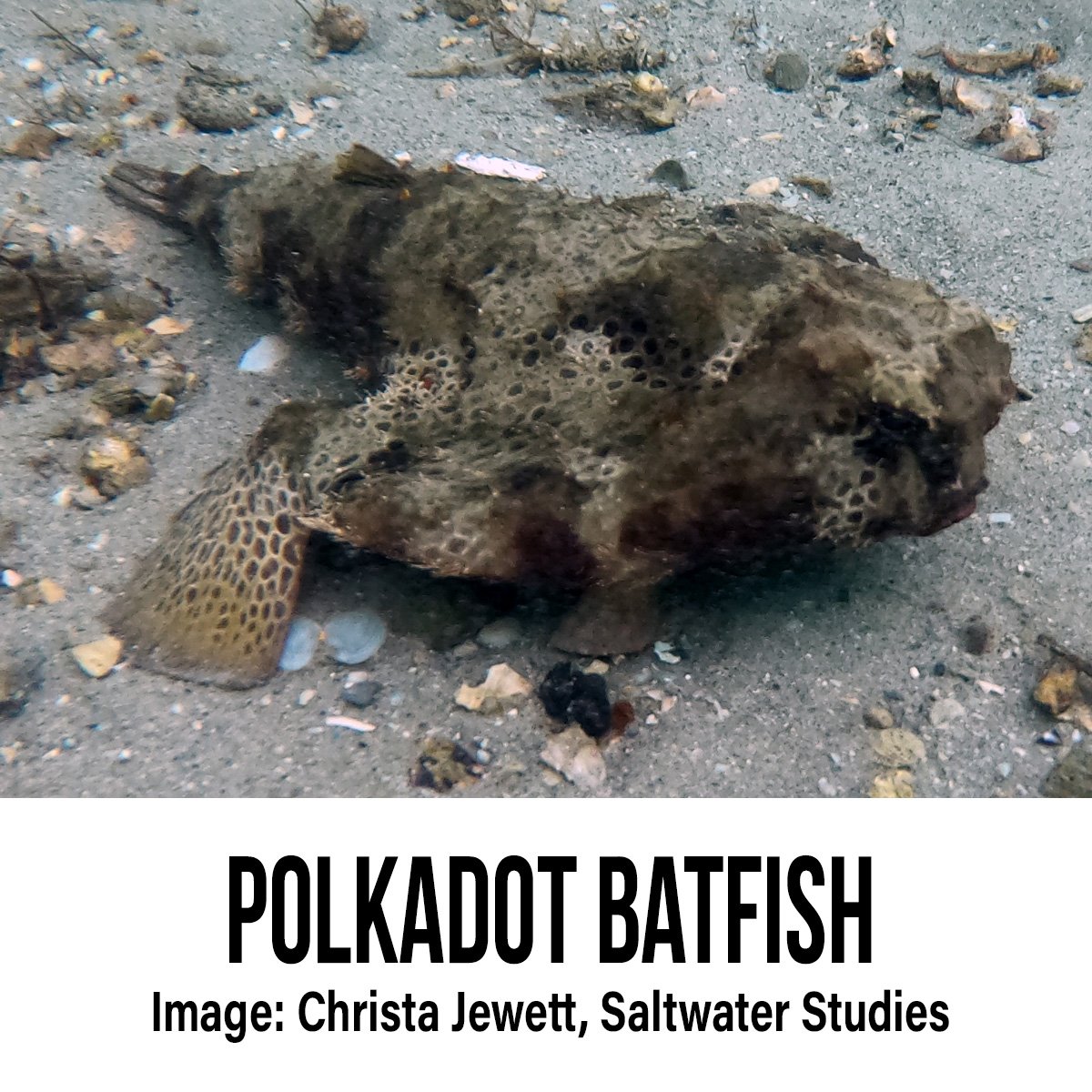
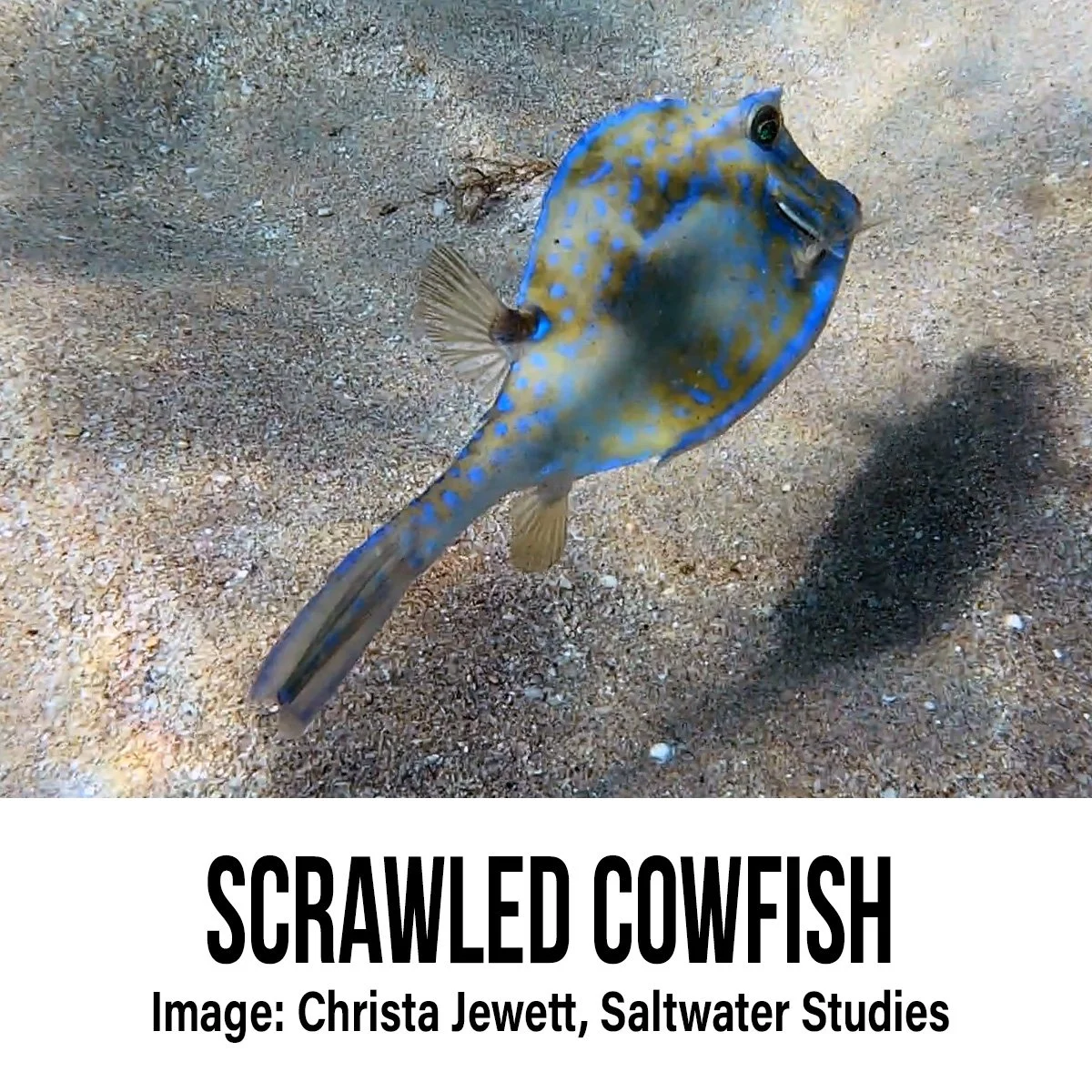


Now it is time to apply what you've learned! In Romans 1:20, the Bible says that we can learn about God’s character by looking at what He made. Consider both the biblical and biological information that was discussed in this lesson and then write out your answers to the following questions.
This week we read Scriptures describing God as the engineer of Creation. How can you see this character of God in the bony fishes that He created?
Take a few moments to consider all of the different types of animals that God made. Think about one aspect of these animals that you enjoy. Tell God about it by writing it out on paper. Then write out a prayer of thanksgiving to the Lord praising Him for His Creation.